Previous Work
Education
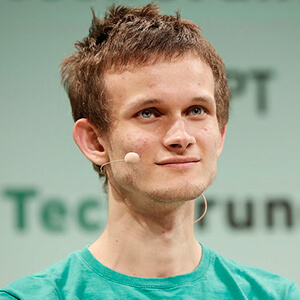
Vitalik Buterin: Innovator and Co-Founder of Ethereum
Biography of Vitalik Buterin
Early Life
Vitalik Buterin was born in Kolomna, Moscow Oblast, Russia. At the age of six, his family moved to Canada in search of better job opportunities. This relocation marked a significant turning point in his life, introducing him to a new culture and environment.
Education and Intellectual Development
In Canada, Buterin displayed prodigious intellectual abilities from an early age. He was recognized for his talents in third grade and was placed into a specialized program for gifted students. During this time, he showed a strong affinity for mathematics, programming, and economics. His cognitive skills were remarkable; he could perform mental calculations with three-digit numbers faster than many of his peers.
Academic Achievements
In 2012, Vitalik achieved international recognition by winning a Bronze Medal at the International Olympiad in Informatics. He continued his academic journey at the University of Waterloo, where he further honed his skills and insights into technology and economics. However, a pivotal moment in his life came in 2014 when he was awarded the Thiel Fellowship. This fellowship provided him with the opportunity to pursue his passions without the confines of a traditional educational path.
Involvement in Cryptocurrency
Following the receipt of the Thiel Fellowship, Buterin immersed himself in the world of Bitcoin. His experiences and insights during this time led him to envision a broader scope for blockchain technology that transcended the limitations of Bitcoin.
Creation of Ethereum
In 2015, Vitalik Buterin co-founded Ethereum, a groundbreaking platform that incorporates a decentralized mining network and a software development ecosystem. Ethereum introduced a novel paradigm in the cryptocurrency sector, allowing for the creation of decentralized applications and innovative cryptocurrencies that operate on a unified blockchain infrastructure. This transformative vision has cemented Ethereum's place as a leader in the cryptocurrency realm.
Legacy and Impact
Today, Vitalik Buterin is recognized not only as the co-founder of Ethereum but also as a pivotal figure in the cryptocurrency and blockchain innovation space. His ideas and leadership continue to inspire a generation of developers and entrepreneurs who seek to create decentralized applications that aim to reshape societal structures and financial systems.
Conclusion
Vitalik Buterin's journey from a gifted child in Russia to a leading figure in the cryptocurrency world is a testament to his intelligence, creativity, and vision. His contributions to Ethereum and the broader crypto landscape highlight his innovative spirit and commitment to technological advancement.
Vitalik Buterin's Connection to Cryptocurrencies, Blockchain, and Mining
Early Involvement in Cryptocurrency
Vitalik Buterin's journey into the world of cryptocurrency began with his early interest in Bitcoin, which was the first and most well-known digital currency. In 2011, he co-founded a publication called Bitcoin Magazine, allowing him to delve deeper into the technology and the community surrounding Bitcoin. His role as a writer provided him with insights and connections in the burgeoning crypto space.
Creation of Ethereum
Recognizing the limitations of Bitcoin in terms of programmability and potential applications, Buterin proposed the development of a more versatile platform. In 2013, he unveiled the Ethereum whitepaper, outlining a decentralized platform capable of running smart contracts—self-executing contracts with the agreement directly written into code. This innovation led to the birth of Ethereum, which officially launched in July 2015.
Smart Contracts and Decentralized Applications (DApps)
Ethereum's architecture enables developers to create decentralized applications (DApps) on its blockchain. This capability extends far beyond cryptocurrencies, allowing for a vast range of applications, from games to financial services and beyond. The incorporation of smart contracts revolutionizes trust-based interactions, dramatically reducing the need for intermediaries.
Proof of Work and Mining
Initially, Ethereum operated on a Proof of Work (PoW) consensus mechanism similar to Bitcoin's. In this system, miners solved complex mathematical puzzles to validate transactions and add new blocks to the blockchain, earning Ether (ETH) as a reward. Buterin was instrumental in guiding the Ethereum community towards a more sustainable model, acknowledging the environmental concerns associated with PoW mining.
Transition to Proof of Stake
Under Buterin's leadership, Ethereum began transitioning to a Proof of Stake (PoS) consensus mechanism with the Ethereum 2.0 upgrade. PoS enhances energy efficiency and security by allowing validators to create and validate new blocks based on the number of coins they hold and are willing to "stake" as collateral. This shift marked a significant moment in Ethereum's evolution, promoting scalability and sustainability.
Impact on the Cryptocurrency Ecosystem
Buterin's contributions through Ethereum have reshaped the landscape of cryptocurrencies. The platform has facilitated the rise of Initial Coin Offerings (ICOs), decentralized finance (DeFi) applications, and Non-Fungible Tokens (NFTs). Ethereum's blockchain has become a foundational technology upon which countless projects are built, affirming its place as a leader in the space.
Continued Development and Vision
Vitalik Buterin continues to play an active role in the development of Ethereum and the broader blockchain ecosystem. His focus on scalability, interoperability, and community engagement reflects his vision for a decentralized future, where blockchain technology empowers individuals and communities globally.
Impact of Vitalik Buterin on Cryptocurrencies, Blockchain, and Mining
Revolutionizing Blockchain Technology
Vitalik Buterin's contributions to the blockchain environment through Ethereum have fundamentally transformed how decentralized applications are built and deployed. Ethereum's introduction of smart contracts provided a programmable way to define terms and manage transactions, thus paving the way for countless innovations that go beyond mere currency. This development marked a transition from traditional blockchain systems to programmable platforms, allowing developers to create complex decentralized systems that could automate a range of tasks seamlessly on the blockchain.
Influence on Cryptocurrencies
Through the establishment of Ethereum, Buterin has significantly shaped the landscape of cryptocurrencies. By enabling the tokenization of various projects, he has inspired a vast number of Initial Coin Offerings (ICOs) and has empowered other developers to create their own cryptocurrencies. Ethereum's ERC-20 standard allowed for the creation of tokens that became instrumental for fundraising and project development in the crypto space. This has led to Ethereum's dominance in the market, often referred to as the backbone for various projects and innovations.
Advancements in Mining Protocols
Buterin's influence extends to mining protocols as well, particularly with Ethereum's shift from Proof of Work (PoW) to Proof of Stake (PoS). This transition focuses on reducing the environmental impact associated with cryptocurrency mining while enhancing scalability and security. By advocating for and implementing PoS, Buterin has encouraged other projects to re-evaluate their consensus mechanisms, prompting a broader discussion on sustainability in the crypto mining industry. This shift can significantly reduce energy consumption and operational costs, positioning the crypto ecosystem as a more responsible player in the global energy landscape.
Driving Innovation and Community Engagement
Buterin’s approach emphasizes community engagement and decentralized governance, inspiring a collaborative environment in the development of blockchain solutions. His belief in open source projects encourages developers worldwide to contribute, enhancing the collective intelligence of the ecosystem. This level of collaboration fosters resilience and diversity, making the blockchain space more robust against monopolistic tendencies that can arise within emerging technologies.
Conclusion
In summary, Vitalik Buterin's influence on cryptocurrencies, blockchain technology, and mining practices is profound. By introducing Ethereum, he catalyzed an era of innovation that emphasizes programmability, community-driven development, and sustainability. His vision and leadership continue to inspire a new generation of developers, entrepreneurs, and investors, solidifying his role as a pivotal figure in the ongoing evolution of the digital currency landscape.