Previous Work
Education
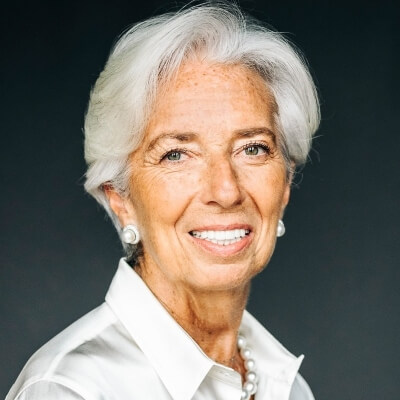
Christine Lagarde - Leader in Global Finance and President of the ECB
Biography of Christine Lagarde
Early Life and Education
Christine Lagarde was born on January 1, 1956, in Paris, France. She pursued her education in law and political science, obtaining a license in law from the University of Paris and later completing her master's degree at the same institution. Lagarde furthered her studies in political science at the Institut d'Études Politiques de Paris, known as Sciences Po.
Career in Law
Before entering politics, Lagarde had a successful career in law. She joined the international law firm Baker & McKenzie in 1981, where she specialized in labor law and became the first female chair of the firm’s global department.
Political Career
Lagarde transitioned into politics in the early 2000s. She was appointed Minister of Agriculture and Fishing in 2007. Following this role, she became Minister of Economic Affairs in 2008. As Minister of Economic Affairs, Lagarde played a vital role in managing France's economic strategies during the global financial crisis. In 2010, she was appointed Minister of Finance, making her the first woman to hold this position in France.
International Monetary Fund (IMF)
In 2011, Christine Lagarde was appointed as the Managing Director of the International Monetary Fund (IMF), where she served until 2019. During her tenure, she navigated several global financial crises and was instrumental in promoting international cooperation to address economic challenges, particularly in the Eurozone. Lagarde advocated for inclusive economic policies, gender equality, and strategies to combat climate change, which garnered her recognition on the global stage.
European Central Bank (ECB)
In November 2019, Christine Lagarde took office as the President of the European Central Bank (ECB). In this influential role, she is responsible for shaping monetary policy, ensuring price stability, and overseeing the banking system within the Eurozone. Her leadership is vital for maintaining economic stability and promoting growth across European economies.
Awards and Recognition
Lagarde's exceptional leadership and expertise in global finance have earned her numerous accolades. She has been consistently ranked among the world's most powerful women by Forbes magazine. Her contributions to economic stability, financial reform, and sustainable development have established her as a respected and influential figure in global finance and policy-making.
Conclusion
Christine Lagarde's career spans significant contributions to both national and international economic governance. With her profound expertise and commitment to important global issues, she continues to play a crucial role in shaping the future of economic policy in Europe and beyond.
Christine Lagarde and Cryptocurrencies, Blockchain, and Mining
Christine Lagarde has acknowledged the potential implications of cryptocurrencies and blockchain technology on global finance. While serving as the President of the European Central Bank (ECB), she has consistently highlighted the need for regulatory frameworks to address the challenges posed by digital currencies.
Views on Cryptocurrencies
Lagarde has expressed concerns regarding the use of cryptocurrencies for illicit activities, including money laundering and terrorist financing. She believes that while cryptocurrencies can offer innovative solutions for payments and financial transactions, they also pose significant risks to financial stability and consumer protection.
Emphasis on Regulation
Under her leadership at the ECB, Lagarde has advocated for a concerted approach to regulate cryptocurrencies. She has stressed the importance of adopting a comprehensive regulatory framework across the European Union to mitigate risks and promote financial integrity. Her emphasis on regulation signifies a recognition of the growing importance of digital assets and the need for oversight to protect investors and maintain trust in the financial system.
Central Bank Digital Currencies (CBDCs)
Lagarde has been a proponent of exploring Central Bank Digital Currencies (CBDCs) as a response to the rise of cryptocurrencies. The ECB has been actively researching the feasibility of a digital euro, which could offer a state-backed alternative to private cryptocurrencies. Lagarde has highlighted the potential benefits of CBDCs in enhancing payment efficiency, fostering innovation, and maintaining monetary sovereignty.
Involvement in Blockchain Discussions
Lagarde is known to engage in discussions about the role of blockchain technology in the financial sector. She has acknowledged that blockchain could revolutionize traditional banking and payment systems by providing transparency and security. The use of distributed ledger technology could lead to more efficient cross-border payments and streamline various financial operations.
Collaboration and Research Initiatives
During her tenure at the ECB, Lagarde has emphasized the importance of collaboration between central banks, fintech companies, and academic institutions to explore the potential of blockchain and cryptocurrencies. The ECB has been involved in research initiatives and pilot projects aimed at understanding the implications of digital currencies and enhancing the central bank's capabilities in this rapidly evolving landscape.
Conclusion
Christine Lagarde's views and actions concerning cryptocurrencies, blockchain technology, and mining reflect her recognition of their transformative potential as well as the associated challenges. Her ongoing commitment to regulatory frameworks and research initiatives indicates a proactive approach to integrating innovation while safeguarding financial stability.
Influence of Christine Lagarde on Cryptocurrencies, Blockchain, and Mining
Christine Lagarde, as the President of the European Central Bank (ECB), exercises significant influence over the regulatory and monetary landscape affecting cryptocurrencies, blockchain technology, and mining activities within the Eurozone. Her position empowers her to shape policies that impact the adoption and integration of digital currencies in mainstream finance.
1. Regulatory Environment
Lagarde has been an advocate for establishing a robust regulatory framework governing cryptocurrencies. Her emphasis on creating clear regulations aims to ensure consumer protection, prevent financial crimes like money laundering, and maintain the integrity of the financial system. This sets the stage for a more secure environment for both users and businesses involved in blockchain technology and cryptocurrencies.
2. Central Bank Digital Currency (CBDC)
Under Lagarde's leadership, the ECB has explored the concept of a digital euro, which directly impacts the landscape of cryptocurrencies. The push for a CBDC could create competition for existing cryptocurrencies, prompting them to adapt and innovate. Lagarde’s support for a digital euro may also validate the use of digital currencies in public trust, potentially enhancing the legitimacy of the cryptocurrency sector as a whole.
3. Monetary Policy Implications
Lagarde's decisions on monetary policy—particularly interest rates and inflation—indirectly affect the attractiveness of cryptocurrencies as alternative assets. In times of low-interest rates or economic uncertainty, digital assets often gain traction as investors seek new avenues for wealth preservation and growth. Lagarde’s influence in shaping monetary policies thus plays a crucial role in the cryptocurrency markets.
4. Market Sentiment
Lagarde is a highly respected figure in the global financial community. Her statements regarding cryptocurrencies and their potential applications can sway market sentiment. Positive remarks on the innovation of blockchain could increase investor interest and engagement in the sector, while cautionary language may lead to volatility and caution among market participants.
5. Promotion of Innovation
By endorsing the adoption of digital transformation in banking, Lagarde promotes innovation in financial technology. This includes the exploration of decentralized finance (DeFi) solutions and blockchain applications that could streamline financial processes. Her advocacy for technological advancement encourages collaboration between traditional financial institutions and innovative startups.
Conclusion
Christine Lagarde's influence on cryptocurrencies, blockchain, and mining is multifaceted, impacting regulatory frameworks, market sentiment, and the promotion of digital innovation. Her leadership at the ECB not only enables a counterbalance to the rise of private cryptocurrencies but also fosters an environment conducive to the evolution of financial technologies. As the cryptocurrency landscape evolves, Lagarde's policies and actions will likely continue to shape its trajectory significantly.