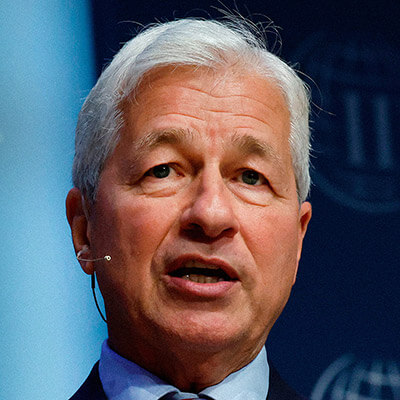
Jamie Dimon - A Leader in Banking and Finance
Biography of Jamie Dimon
Early Life and Education
Jamie Dimon was born and raised in New York City. He attended the Browning School for his early education. He later pursued higher education at Tufts University, where he majored in psychology and economics, graduating summa cum laude. During his time at Tufts, Dimon wrote an essay on Shearson’s mergers, which sparked his interest in finance and ultimately led to a summer job at Shearson, facilitated by Sandy Weill.
Early Career
After graduating from Tufts, Dimon began his career in management consulting at Boston Consulting Group, where he worked for two years. He then attended Harvard Business School, working at Goldman Sachs during the summer before graduating. Dimon earned his MBA in 1982, graduating as a Baker Scholar.
Professional Trajectory
Upon his graduation from Harvard, Dimon had offers from several prestigious firms including Goldman Sachs, Morgan Stanley, and Lehman Brothers. However, he chose to join American Express at the urging of Sandy Weill, despite the lower salary. At that time, Dimon's father, Theodore Dimon, was an executive vice president at American Express, which added personal significance to his decision.
Tenure at JPMorgan Chase
In 2005, Jamie Dimon was appointed chairman and CEO of JPMorgan Chase, a role he has held since then. He has successfully navigated the bank through various economic challenges. Dimon is notable for being one of the few bank CEOs to become a billionaire, primarily due to his significant stake in JPMorgan Chase, valued at $485 million.
Financial Performance and Compensation
Dimon's compensation has varied significantly throughout his career, peaking at $23 million in 2011. His earnings dipped to $11.5 million in 2012 due to a series of controversial trading losses but surged to $34.5 million in fiscal year 2022.
Recognition and Influence
Dimon is recognized as a leading figure in the finance industry. He has been featured multiple times in Time magazine’s lists of the world’s 100 most influential people, specifically in 2006, 2008, 2009, and 2011. His leadership, financial acumen, and tenacity continue to shape the banking and finance sector.
Wealth and Current Status
As of June 2023, Forbes estimated Jamie Dimon’s net worth to be $1.6 billion, reflecting his successful career and investments. He remains a key player in the financial world, influencing policies and strategies at JPMorgan Chase and across the broader banking industry.
Jamie Dimon and His Connection to Cryptocurrencies, Blockchain, and Mining
Jamie Dimon has been a vocal critic of cryptocurrencies, particularly Bitcoin. His skepticism stems from concerns about the asset’s volatility, the potential for fraud, and the lack of regulatory oversight. He has referred to Bitcoin as a "fraud" and warned investors about the risks. His comments have sparked debates within the financial community about the future and legitimacy of digital currencies.
Criticism of Bitcoin and Cryptocurrencies
- Bitcoin as a Fraud: In a 2017 statement, Dimon famously labeled Bitcoin a "fraud," arguing it was not a legitimate store of value and would ultimately end up "badly."
- Volatility Concerns: Dimon has pointed out the high volatility associated with Bitcoin, indicating that such instability makes it unsuitable as a currency or reliable investment.
- Regulatory Issues: He has emphasized the importance of regulation in the cryptocurrency market, expressing concerns about the potential for money laundering and use in illegal activities.
Role of JPMorgan Chase in Blockchain
While Dimon has been critical of Bitcoin, JPMorgan has actively explored blockchain technology. The bank has invested in blockchain initiatives, believing that the technology can improve transaction efficiency and transparency.
- JPM Coin: In 2019, JPMorgan introduced its own digital currency, the JPM Coin, which is intended for internal use to facilitate instantaneous transfer of payments between institutional clients.
- Blockchain Solutions: The bank has developed a blockchain network called Quorum, which focuses on facilitating secure transactions and smart contract applications in the financial sector.
Cryptocurrency Trading and Services
Amidst Dimon's criticisms of Bitcoin, JPMorgan has also begun offering cryptocurrency-related services to clients. This includes facilitating access to crypto markets and providing wealth management advice that includes digital assets.
- Facilitating Cryptocurrency Trading: The bank has created avenues for clients to trade cryptocurrencies while conducting research on their potential risks and rewards.
- Strategic Partnerships: JPMorgan has explored partnerships with cryptocurrency exchanges and other firms in the blockchain ecosystem, emphasizing a pragmatic approach to integrating digital assets into traditional finance.
Conclusion
While Jamie Dimon’s public stance on cryptocurrencies has been largely negative, his leadership at JPMorgan has steered the bank toward embracing blockchain technology and cautiously exploring potential opportunities within the cryptocurrency space. This dual approach showcases the tension between traditional banking perspectives and the evolving landscape of digital currencies.
Jamie Dimon's Influence on Cryptocurrencies, Blockchain, and Mining
Jamie Dimon, as the CEO of JPMorgan Chase, has made significant statements and decisions regarding the cryptocurrency and blockchain space, shaping the industry's perception and development in various ways.
1. Skepticism Toward Cryptocurrencies
Dimon has been openly critical of cryptocurrencies, particularly Bitcoin, which he has referred to as a "fraud" in the past. His strong stance against Bitcoin has influenced public sentiment and the attitudes of investors and institutions towards cryptocurrencies. His remarks can lead to increased volatility in the cryptocurrency markets, as they are often scrutinized by the financial community.
2. Blockchain Technology Advocacy
Despite his criticism of cryptocurrencies, Dimon has expressed a positive outlook on blockchain technology. JPMorgan has been involved in various blockchain initiatives, including the development of Quorum, a blockchain platform for businesses. This duality shows Dimon’s belief in the underlying technology while being wary of the speculative nature of digital currencies.
3. Institutional Adoption and Regulatory Influence
As a leading figure in finance, Dimon’s opinions carry weight among banks and financial institutions. His influence can affect how other banks perceive and respond to cryptocurrencies. Dimon has also been involved in discussions regarding regulatory frameworks for cryptocurrencies, reflecting a need for a balanced approach that aids innovation while protecting consumers.
4. Promoting Digital Currency Initiatives
In 2020, JPMorgan launched its own digital coin, JPM Coin, aimed at speeding up transactions between clients. This initiative indicates a movement towards incorporating digital assets into traditional banking systems, which may lessen the gap between cryptocurrencies and conventional financial practices.
5. Impact on Mining
While Dimon has not specifically focused on cryptocurrency mining, his views on the industry could indirectly impact the mining sector. For instance, his skepticism can stymie investment in mining operations by institutional investors who align their strategies with his perspectives.
Conclusion
Jamie Dimon's impact on cryptocurrencies, blockchain technology, and mining is significant. His critical stance on cryptocurrencies could deter some institutional adoption, whereas his advocacy for blockchain signals a sort of cautious acceptance of the technology. Ultimately, Dimon’s influence represents a balance between traditional banking interests and the evolving landscape of digital currencies, which will continue to shape the future of finance.