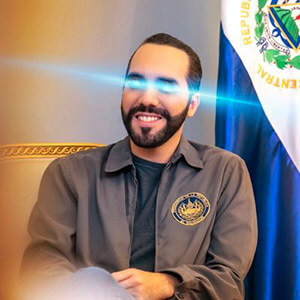
Nayib Bukele: The 46th President of El Salvador
Nayib Bukele: Biography
Full Name: Nayib Armando Bukele Ortez
Current Position: 46th President of El Salvador
Date of Birth: July 24, 1981
Early Life and Education
Nayib Bukele was born in San Salvador, the capital of El Salvador. He belongs to a middle-class family, and his father was a businessman. Bukele attended the Gabriela Mistral School, a private institution, and later studied at the Central American University (UCA), where he majored in Business Administration.
Political Career
Bukele began his political career in 2012 when he was elected as the mayor of Nuevas Ideas, a position he held until 2015. He gained national prominence in 2015 when he became the mayor of San Salvador. During his tenure as mayor, he implemented various urban projects aimed at improving the city's infrastructure and public services.
Presidential Election
In 2019, Bukele ran for the presidency of El Salvador representing the Grand Alliance for National Unity (GANA) party after founding his own political party, Nuevas Ideas. He won the presidential election held on February 3, 2019, securing a significant majority with a campaign focused on transparency, anti-corruption, and economic growth.
Presidency
Bukele was officially inaugurated as President on June 1, 2019. His administration has been characterized by a strong social media presence and a direct communication style with the public. Bukele has prioritized tackling crime in El Salvador, which has one of the highest homicide rates in the world, and has taken various measures to curb violence, including military interventions and police patrols in high-crime areas.
Bitcoin Adoption
In 2021, Bukele made headlines for announcing that El Salvador would adopt Bitcoin as legal tender. This move was aimed at boosting the country's economy and attracting foreign investment. The decision was met with mixed reactions from both the public and international financial institutions.
Controversies
During his presidency, Bukele faced criticisms regarding his handling of the judiciary and allegations of undermining democratic institutions. His government's actions have sparked debates about authoritarianism and the rule of law in El Salvador.
Personal Life
Nayib Bukele is married to Gabriela Rodríguez, with whom he has two children. His family has appeared in public events, emphasizing a family-oriented image.
Nayib Bukele and Cryptocurrencies
Nayib Bukele has gained international attention for his bold stance on cryptocurrencies, particularly Bitcoin. In September 2021, he announced that El Salvador would become the first country in the world to officially adopt Bitcoin as legal tender, a move that sparked both enthusiasm and skepticism worldwide.
Legal Tender Status
On September 7, 2021, under Bukele's government, the Bitcoin Law came into effect. This law allows Bitcoin to be used for all transactions, including tax payments, making it a parallel currency alongside the U.S. dollar, which has been the country's primary currency since 2001.
Bitcoin Bonds
In November 2021, Bukele announced plans to issue $1 billion worth of "Bitcoin Bonds" to help fund the construction of a "Bitcoin City" near a volcano in the country. The bonds were intended to attract investors, with the proceeds aimed at funding various public projects and building more infrastructure to support Bitcoin mining.
Bitcoin Mining Initiatives
Bukele has also explored the potential for Bitcoin mining in El Salvador. He proposed utilizing the country’s volcanic geothermal energy resources to power Bitcoin mining operations, aiming to create a sustainable and eco-friendly mining environment. In late 2021, he announced that miners from the state-owned geothermal plant would start mining Bitcoin using energy generated from volcanic power.
Public Reaction and Criticism
Bukele’s cryptocurrency initiatives have been met with mixed reactions. Supporters argue that this move could boost the Salvadoran economy by attracting foreign investment and enhancing remittances, while critics raise concerns about the volatility of cryptocurrencies and the implications for financial stability. Additionally, the International Monetary Fund (IMF) and various financial organizations issued warnings regarding the adoption of Bitcoin as legal tender.
Global Influence
Bukele's decision to embrace Bitcoin has inspired discussions in other nations about the potential integration of cryptocurrencies into their own financial systems. His bold moves have positioned El Salvador as a unique case study in the global dialogue surrounding digital currencies and economic innovation.
Nayib Bukele's Influence on Cryptocurrencies, Blockchain, and Mining
Nayib Bukele has had a profound impact on the landscape of cryptocurrencies, blockchain technology, and mining, particularly through his decision to adopt Bitcoin as legal tender in El Salvador. This move, officially implemented on September 7, 2021, marked a significant milestone as El Salvador became the first country in the world to recognize Bitcoin as a legal currency alongside the U.S. dollar.
1. Adoption of Bitcoin as Legal Tender
Bukele's administration aimed to increase financial inclusion in El Salvador, where a large portion of the population remains unbanked. By promoting Bitcoin for everyday transactions, Bukele sought to provide citizens with an alternative beyond traditional financial systems. This has positioned El Salvador as a pioneer in the global cryptocurrency movement, potentially attracting investors and innovators in the blockchain space.
2. Bitcoin Bond Issuance
In 2021, the Bukele government announced plans to introduce "Bitcoin bonds," also known as "Volcano Bonds," intended to raise $1 billion for various initiatives, including the construction of a "Bitcoin City." This effort not only emphasizes the government's commitment to integrating Bitcoin into the national economy but also aims to further legitimize and attract international investment into Salvadoran cryptocurrency ventures.
3. Promotion of Bitcoin Mining
Bukele has actively encouraged Bitcoin mining in El Salvador, leveraging the country's geothermal energy resources to power mining operations. This initiative aims to make mining more sustainable and position the country as a potential hub for environmentally friendly Bitcoin production. In addition, Bukele's government has proposed providing incentives for miners, potentially attracting both local and foreign investments.
4. Education and Innovation
Under Bukele's leadership, there has been a push for education and innovation in the blockchain sector. The government has invested in training programs and initiatives to foster a deeper understanding of cryptocurrencies among the populace, aiming to cultivate a knowledgeable workforce that can contribute to the burgeoning blockchain industry.
5. Global Influence and Controversy
While Bukele’s measures have garnered significant international attention, they have also sparked controversy, particularly regarding risks associated with financial volatility and the potential for increased crime associated with cryptocurrency use. Nevertheless, his bold approach has positioned El Salvador as a case study in how national economies can adapt to and integrate emerging technologies.
Conclusion
Nayib Bukele's influence on cryptocurrencies, blockchain, and mining is substantial, as his policies and initiatives have placed El Salvador at the forefront of the crypto revolution. His administration's commitment to Bitcoin adoption could serve as a model for other nations considering similar paths, although the long-term implications of such a shift remain to be fully realized.